<?xml version="1.0" encoding="utf-8"?>
<!DOCTYPE html PUBLIC "-//W3C//DTD XHTML 1.1 plus MathML 2.0 plus SVG 1.1//EN" "http://www.w3.org/2002/04/xhtml-math-svg/xhtml-math-svg.dtd">
<html xmlns="http://www.w3.org/1999/xhtml">
  <head>
    <meta http-equiv="Content-Type" content="application/xhtml+xml; charset=utf-8"/>
    <title>Project-Team:E-MOTION</title>
    <link rel="stylesheet" href="../static/css/raweb.css" type="text/css"/>
    <meta name="description" content="New Results - A new formulation of the Bayesian Occupancy Filter: a hybrid sampling based framework"/>
    <meta name="dc.title" content="New Results - A new formulation of the Bayesian Occupancy Filter: a hybrid sampling based framework"/>
    <meta name="dc.creator" content="Lukas Rummelhard"/>
    <meta name="dc.creator" content="Amaury Nègre"/>
    <meta name="dc.creator" content="Christian Laugier"/>
    <meta name="dc.creator" content="Lukas Rummelhard"/>
    <meta name="dc.creator" content="Amaury Nègre"/>
    <meta name="dc.creator" content="Mathias Perrollaz"/>
    <meta name="dc.creator" content="Christian Laugier"/>
    <meta name="dc.subject" content=""/>
    <meta name="dc.publisher" content="INRIA"/>
    <meta name="dc.date" content="(SCHEME=ISO8601) 2014-01"/>
    <meta name="dc.type" content="Report"/>
    <meta name="dc.language" content="(SCHEME=ISO639-1) en"/>
    <meta name="projet" content="E-MOTION"/>
    <!-- Piwik -->
    <script type="text/javascript" src="/rapportsactivite/piwik.js"></script>
    <noscript><p><img src="//piwik.inria.fr/piwik.php?idsite=49" style="border:0;" alt="" /></p></noscript>
    <!-- End Piwik Code -->
  </head>
  <body>
    <div class="tdmdiv">
      <div class="logo">
        <a href="http://www.inria.fr">
          <img style="align:bottom; border:none" src="../static/img/icons/logo_INRIA-coul.jpg" alt="Inria"/>
        </a>
      </div>
      <div class="TdmEntry">
        <div class="tdmentete">
          <a href="uid0.html">Project-Team E-motion</a>
        </div>
        <span>
          <a href="uid1.html">Members</a>
        </span>
      </div>
      <div class="TdmEntry">Overall Objectives<ul><li><a href="./uid3.html">Research Program</a></li></ul></div>
      <div class="TdmEntry">Application Domains<ul><li><a href="uid12.html&#10;&#9;&#9;  ">Introduction</a></li><li><a href="uid13.html&#10;&#9;&#9;  ">Future cars and transportation systems</a></li><li><a href="uid15.html&#10;&#9;&#9;  ">Service, intervention, and human assistance robotics</a></li><li><a href="uid16.html&#10;&#9;&#9;  ">Potential spin-offs in some other application domains</a></li></ul></div>
      <div class="TdmEntry">New Software and Platforms<ul><li><a href="uid18.html&#10;&#9;&#9;  ">
        PROTEUS Software
      </a></li><li><a href="uid22.html&#10;&#9;&#9;  ">
        AROSDYN
      </a></li><li><a href="uid28.html&#10;&#9;&#9;  ">Embedded Perception</a></li><li><a href="uid29.html&#10;&#9;&#9;  ">Bayesian Occupancy Filter</a></li><li><a href="uid33.html&#10;&#9;&#9;  ">
        PROBT
      </a></li></ul></div>
      <div class="TdmEntry">New Results<ul><li><a href="uid35.html&#10;&#9;&#9;  ">Highlights of the Year</a></li><li class="tdmActPage"><a href="uid38.html&#10;&#9;&#9;  ">A new formulation of the Bayesian Occupancy Filter: a hybrid sampling based framework</a></li><li><a href="uid51.html&#10;&#9;&#9;  ">A new experimental platform for the Technological Research Institute (NanoElec)</a></li><li><a href="uid59.html&#10;&#9;&#9;  ">Visual localization with Open Street Map</a></li><li><a href="uid62.html&#10;&#9;&#9;  ">Human Centered Navigation in the physical world</a></li><li><a href="uid70.html&#10;&#9;&#9;  ">Human modeling for situation understanding</a></li><li><a href="uid75.html&#10;&#9;&#9;  ">Sensor Fusion for state parameters identification</a></li><li><a href="uid80.html&#10;&#9;&#9;  ">Compiling Probabilistic Programs Onto Reconfigurable Logic Using Stochastic Arithmetic</a></li></ul></div>
      <div class="TdmEntry">Bilateral Contracts and Grants with Industry<ul><li><a href="uid87.html&#10;&#9;&#9;  ">Bilateral Contracts with Industry</a></li><li><a href="uid88.html&#10;&#9;&#9;  ">Bilateral Grants with Industry</a></li><li><a href="uid89.html&#10;&#9;&#9;  ">National Initiatives</a></li></ul></div>
      <div class="TdmEntry">Partnerships and Cooperations<ul><li><a href="uid91.html&#10;&#9;&#9;  ">European Initiatives</a></li><li><a href="uid108.html&#10;&#9;&#9;  ">International Initiatives</a></li><li><a href="uid117.html&#10;&#9;&#9;  ">International Research Visitors</a></li></ul></div>
      <div class="TdmEntry">Dissemination<ul><li><a href="uid125.html&#10;&#9;&#9;  ">Scientific Animation</a></li><li><a href="uid140.html&#10;&#9;&#9;  ">Teaching - Supervision - Juries</a></li></ul></div>
      <div class="TdmEntry">
        <div>Bibliography</div>
      </div>
      <div class="TdmEntry">
        <ul>
          <li>
            <a id="tdmbibentmajor" href="bibliography.html">Major publications</a>
          </li>
          <li>
            <a id="tdmbibentyear" href="bibliography.html#year">Publications of the year</a>
          </li>
          <li>
            <a id="tdmbibentfoot" href="bibliography.html#References">References in notes</a>
          </li>
        </ul>
      </div>
    </div>
    <div id="main">
      <div class="mainentete">
        <div id="head_agauche">
          <small><a href="http://www.inria.fr">
	    
	    Inria
	  </a> | <a href="../index.html">
	    
	    Raweb 
	    2014</a> | <a href="http://www.inria.fr/en/teams/e-motion">Presentation of the Project-Team E-MOTION</a> | <a href="http://team.inria.fr/e-motion/en/">E-MOTION Web Site
	  </a></small>
        </div>
        <div id="head_adroite">
          <table class="qrcode">
            <tr>
              <td>
                <a href="e-motion.xml">
                  <img style="align:bottom; border:none" alt="XML" src="../static/img/icons/xml_motif.png"/>
                </a>
              </td>
              <td>
                <a href="e-motion.pdf">
                  <img style="align:bottom; border:none" alt="PDF" src="IMG/qrcode-e-motion-pdf.png"/>
                </a>
              </td>
              <td>
                <a href="../e-motion/e-motion.epub">
                  <img style="align:bottom; border:none" alt="e-pub" src="IMG/qrcode-e-motion-epub.png"/>
                </a>
              </td>
            </tr>
            <tr>
              <td/>
              <td>PDF
</td>
              <td>e-Pub
</td>
            </tr>
          </table>
        </div>
      </div>
      <!--FIN du corps du module-->
      <br/>
      <div class="bottomNavigation">
        <div class="tail_aucentre">
          <a href="./uid35.html" accesskey="P"><img style="align:bottom; border:none" alt="previous" src="../static/img/icons/previous_motif.jpg"/> Previous | </a>
          <a href="./uid0.html" accesskey="U"><img style="align:bottom; border:none" alt="up" src="../static/img/icons/up_motif.jpg"/>  Home</a>
          <a href="./uid51.html" accesskey="N"> | Next <img style="align:bottom; border:none" alt="next" src="../static/img/icons/next_motif.jpg"/></a>
        </div>
        <br/>
      </div>
      <div id="textepage">
        <!--DEBUT2 du corps du module-->
        <h2>Section: 
      New Results</h2>
        <h3 class="titre3">A new formulation of the Bayesian Occupancy Filter: a hybrid sampling based framework</h3>
        <p class="participants"><span class="part">Participants</span> :
	Lukas Rummelhard, Amaury Nègre, Christian Laugier.</p>
        <p>The Bayesian Occupancy Filter (BOF) is a discretized grid structure based
bayesian algorithm, in which the environment is subdivised in cells to which
random variables are linked. These random variables represent the state of
occupancy and the motion field of the scene, without any notion of object
detection and tracking, making the updating part of the filter an evaluation
of the distribution of these variables, according to the new data acquisition.
In the classic representation of the BOF, the motion field of each cell is
represented as a neighborhood grid, the probability of the cell moving from
the current one to another of the neighborhood being stocked in an histogram.
If this representation is convenient for the update, since the potential
antecedents of any cell is exactly determined by the structure, and so the
propagation model is easily parallelizable, it also raises determinant issues
:</p>
        <ul>
          <li>
            <p class="notaparagraph"><a name="uid39"> </a>the structure requires the process rate to be constant, and a priori
known.</p>
          </li>
          <li>
            <p class="notaparagraph"><a name="uid40"> </a>in the case of a moving grid, such as an application of car perception,
many aliasing problems can appear, not only in the occupation grid, but in
the motion fields of cells. A linear interpolation in 4-dimension field to
fill each value of the histograms can quickly become unreasonable.</p>
          </li>
          <li>
            <p class="notaparagraph"><a name="uid41"> </a>to be able to match the slowest moves in the scene and the tiniest
objects, the resolution of the grid and the motion histogram must be the
high. On the other hand, since the system must be able to evaluate the speed
of highly dynamic objects (typically, a moving car), the maximum encoded
speed is to be high as well. This results in a necessary huge resolution
grid, which prevent the system from being used with satisfying results on an
embedded device. This huge grid is also mostly empty (most of the motion
field histogram for a occupied cell will be empty). On top of that, the
perception system being used to represent the direct environment of a moving
car, the encoded velocity is a relative velocity, which implies, if we
consider the maximal speed of a car to be <span class="math"><math xmlns="http://www.w3.org/1998/Math/MathML"><mrow><msub><mi>V</mi><mi>m</mi></msub><mi>a</mi><mi>x</mi></mrow></math></span>, to maintain a motion field
able to represent speeds from <span class="math"><math xmlns="http://www.w3.org/1998/Math/MathML"><mrow><mo>-</mo><mn>2</mn><mo>*</mo><msub><mi>V</mi><mrow><mi>m</mi><mi>a</mi><mi>x</mi></mrow></msub></mrow></math></span> to <span class="math"><math xmlns="http://www.w3.org/1998/Math/MathML"><mrow><mn>2</mn><mo>*</mo><msub><mi>V</mi><mrow><mi>m</mi><mi>a</mi><mi>x</mi></mrow></msub></mrow></math></span>. The necessity of
such a sized structure is a huge limitation of practical use of the method.</p>
          </li>
        </ul>
        <p>Considering those limitations, a new way to represent the motion field has
been developped. To do so, a new formulation of the BOF has been elaborated.
This new version allow to introduce in the filter itself a distinction between
static and dynamic parts, and so adapt the computation power.</p>
        <p>The Hybrid Sampling Bayesian Occupancy Filter (HSBOF)
<a href="./bibliography.html#e-motion-2014-bid0">[21]</a>  is an evolution of the BOF, in which are introduced
additionnal concepts and variables, such as probabilistic classification of
the environment between static and dynamic areas, and adaptative motion model
structure. The main idea of this new representation is to mix two forms of
sampling of the surrounding :</p>
        <ul>
          <li>
            <p class="notaparagraph"><a name="uid42"> </a>a uniform sampling, represented as a dense regular grid, for the static
objects and the empty areas. In this part, only the occupancy is stored, as
the motion model of the static part of the scene is inherent. In practice,
the section of the environment includes the vast majority of the scene.</p>
          </li>
          <li>
            <p class="notaparagraph"><a name="uid43"> </a>a non uniform sampling, based on particles drawn in dynamic regions,
allowing to focus the computational power on the estimation of their motion.
The number of particles used to represent the motion of a particular cell is
calculated according to various criterions, such as the confidence in the
dynamism of the cell, in its estimated motion, the global needs in the scene,
etc. Dynamic regions are resampled at every time step, the amount of
particles associated to the different parts of the scene is dynamicly
calculated.</p>
          </li>
        </ul>
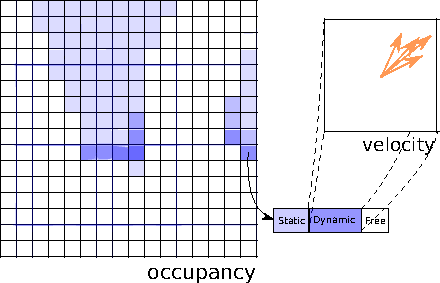
        <p>The motion field in a cell is then represented as a set of samples from the
distribution for values which are not null, and a weight given to the static
hypothesis. The use of a set of samples to represent the motion field leads to
a important decrease of the needed memory space, so do the classification
between dynamic objects and static objects or free areas. In the updating
process, the antecedent of a cell can be either from the static configuration
or from the dynamic configuration, which are both way easier to project in the
new reference frame of the moving grid: the static part requires a 2-dimension
interpolation to be expressed in the new reference frame, the dynamic part a
immediate particle association and a simple rotation of the velocity vectors.</p>
        <p>This new version HSBOF is now used in the core of our systems in place of the
previous version of the BOF. It presents important improvements in the quality
of the estimations, while drastically reducing the memory and computation
costs (easily by a 100 factor in term of memory).</p>
        <div align="center" style="margin-top:10px">
          <a name="uid44">
            <!--...-->
          </a>
          <table title="" class="objectContainer">
            <caption align="bottom">
              <strong>Figure
	1. </strong>
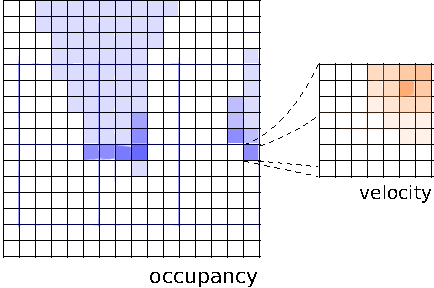
              <p>Data representations in BOF and HSBOF formulation :</p>
              <p class="notaparagraph">(a) Classic BOF representation : a 2 dimension grid, to each cell are assigned an occupancy value and a velocity histogram,</p>
              <p class="notaparagraph">(b) Proposed representation : a 2 dimension grid, to each cell are assigned an occupancy value, a static coefficient <span class="math"><math xmlns="http://www.w3.org/1998/Math/MathML"><mrow><mi>P</mi><mo>(</mo><mi>V</mi><mo>=</mo><mn>0</mn><mo>)</mo></mrow></math></span> and a set of particles drawn along <span class="math"><math xmlns="http://www.w3.org/1998/Math/MathML"><mrow><mi>P</mi><mo>(</mo><mi>V</mi><mo>=</mo><mi>v</mi><mo>|</mo><mi>V</mi><mo>≠</mo><mn>0</mn><mo>)</mo></mrow></math></span></p>
            </caption>
            <tr align="center">
              <td>
                <table>
                  <tr>
                    <td xmlns="" style="height:3px;" align="center">
                      <img xmlns="http://www.w3.org/1999/xhtml" style="width:298.8987pt" alt="IMG/schemaBOF.png" src="IMG/schemaBOF.png"/>
                    </td>
                  </tr>
                  <tr>
                    <td xmlns="" style="height:3px;" align="center">
                      <img xmlns="http://www.w3.org/1999/xhtml" style="width:298.8987pt" alt="IMG/schemaHSBOF.png" src="IMG/schemaHSBOF.png"/>
                    </td>
                  </tr>
                </table>
              </td>
            </tr>
          </table>
        </div>
        <div align="center" style="margin-top:10px">
          <a name="uid45">
            <!--...-->
          </a>
          <table title="" class="objectContainer">
            <caption align="bottom"><strong>Figure
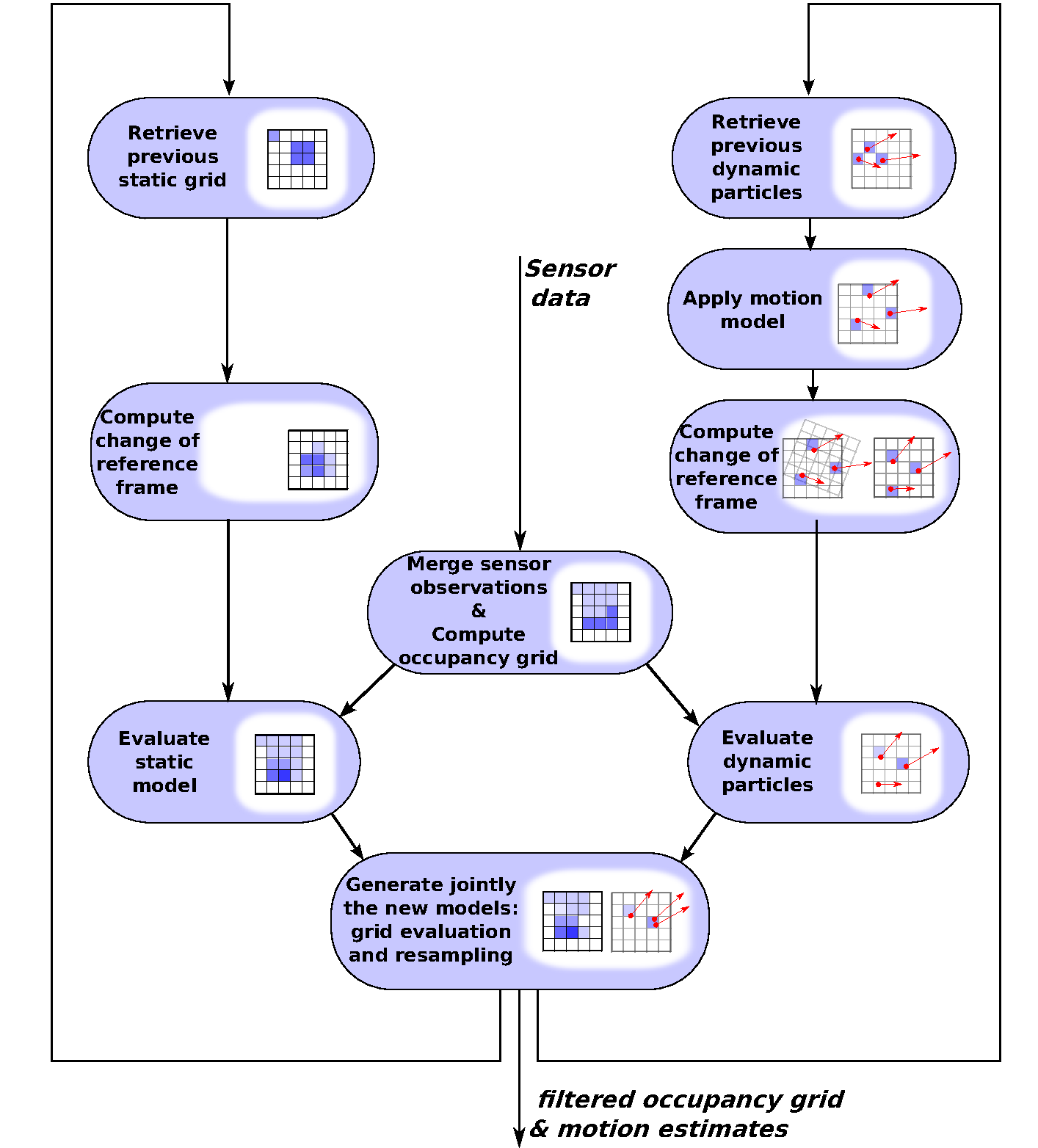
	2. </strong>HSBOF algorithm summary. From sensor data instantaneous occupancy grids are successively computed. Those observations are integrated in a Bayesian filter in which coexist and jointly adapt two models, a static grid and a dynamic set of moving particles. The result is obtained by their combination, which provides a filtered occupancy grid as well as inferred motion distributions for cells.</caption>
            <tr align="center">
              <td>
                <table>
                  <tr>
                    <td xmlns="" style="height:3px;" align="center">
                      <img xmlns="http://www.w3.org/1999/xhtml" style="width:427.0pt" alt="IMG/schemaHSBOF_algo.png" src="IMG/schemaHSBOF_algo.png"/>
                    </td>
                  </tr>
                </table>
              </td>
            </tr>
          </table>
        </div>
        <div align="center" style="margin-top:10px">
          <a name="uid46">
            <!--...-->
          </a>
          <table title="" class="objectContainer">
            <caption align="bottom"><strong>Figure
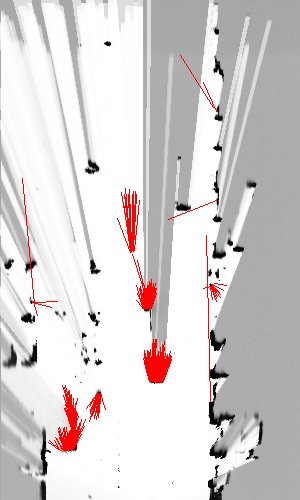
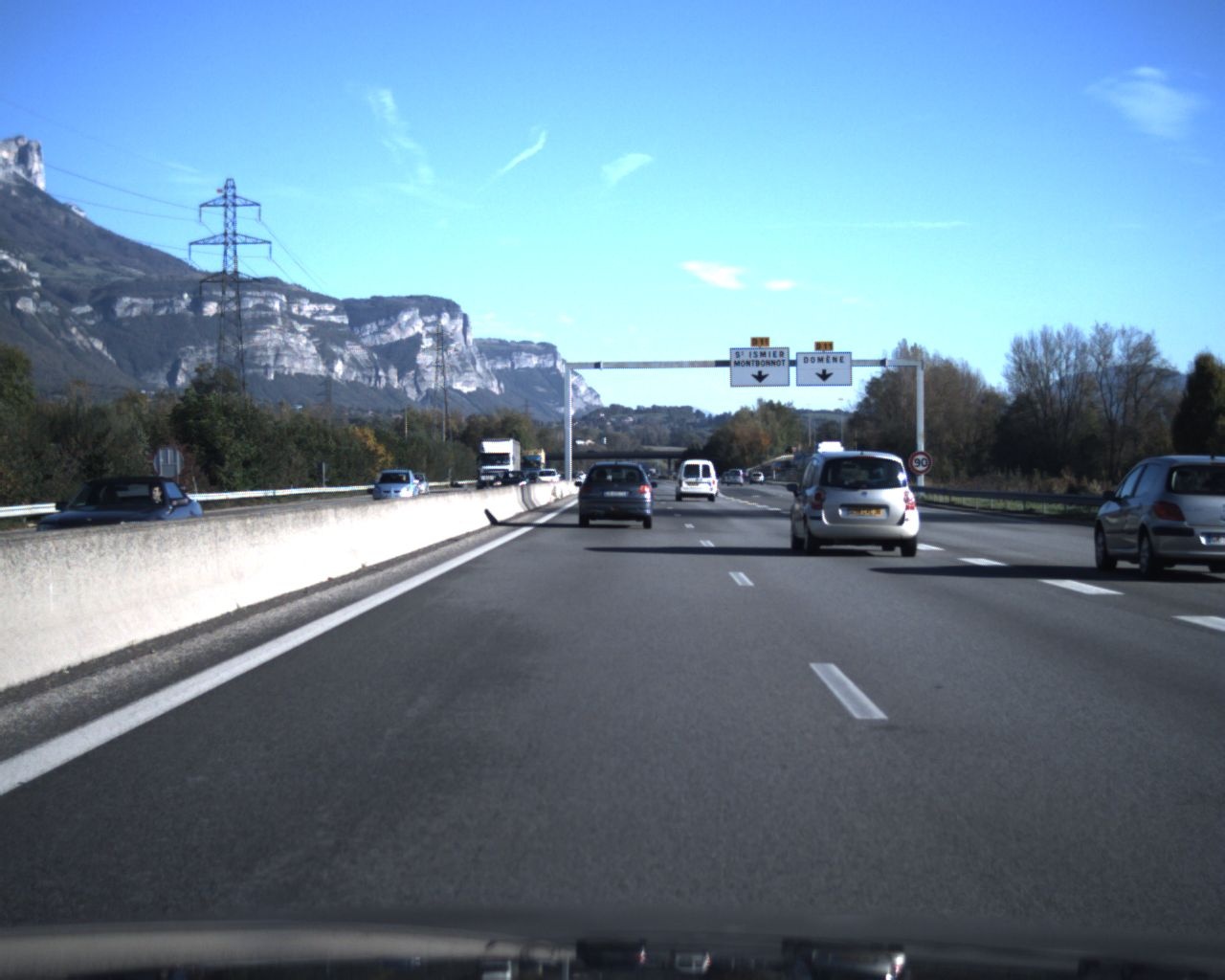
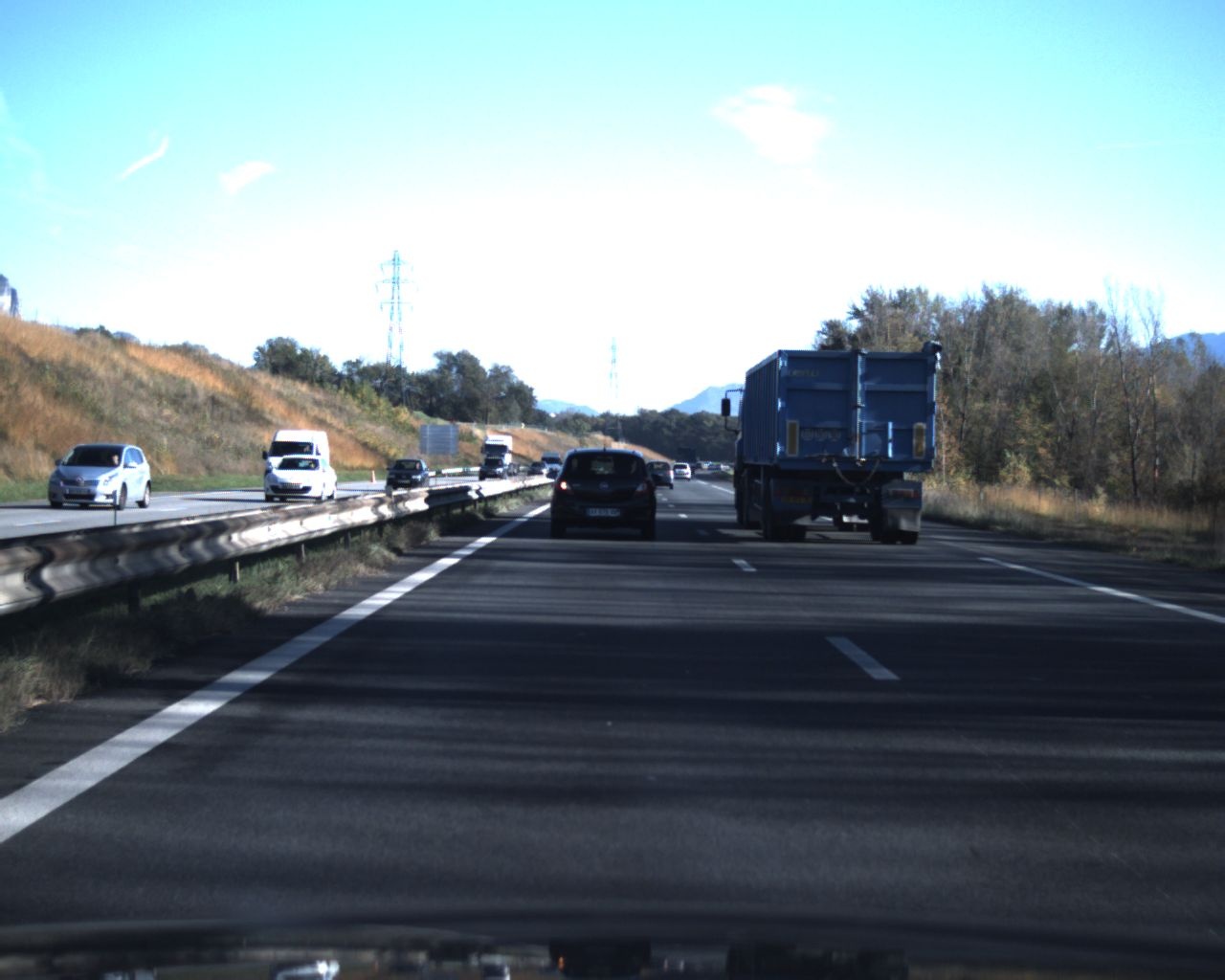
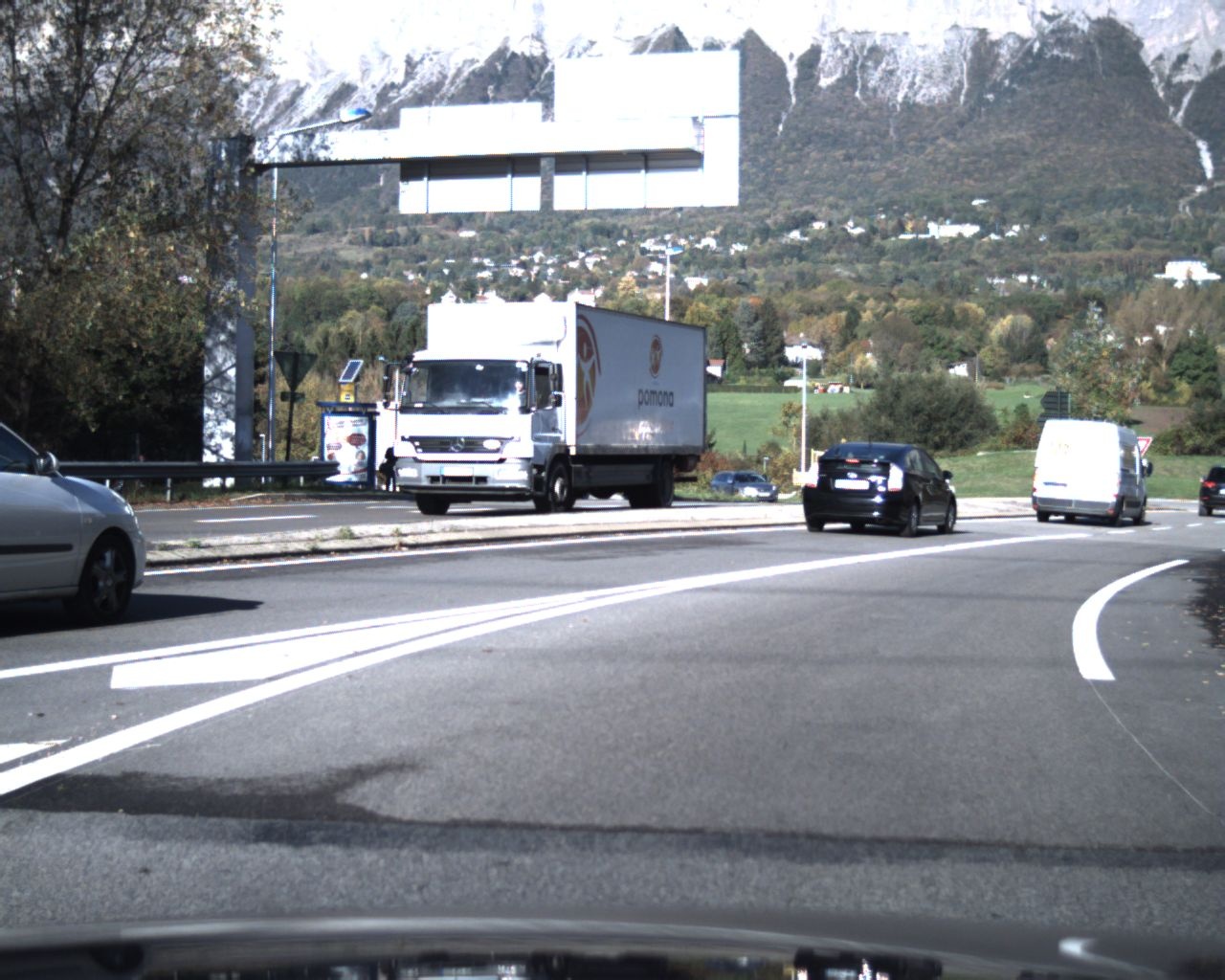
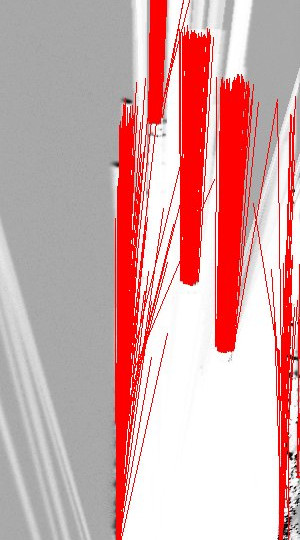
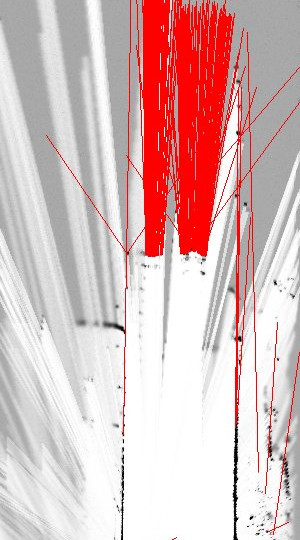
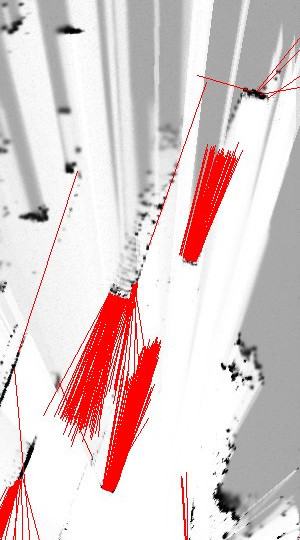
	3. </strong>Resulting occupancy grid and velocity field on different urban and
highway situations. White cells represent the free space, grey one the
unknown space (hidden). Black cells represent the occupied space and red
lines represent the average velocity vector for cell with a high dynamic
probability.</caption>
            <tr align="center">
              <td>
                <table>
                  <tr>
                    <td xmlns="" style="height:3px;" align="center">
                      <img xmlns="http://www.w3.org/1999/xhtml" style="width:93.94052pt" alt="IMG/frame0000.jpg" src="IMG/frame0000.jpg"/>
                    </td>
                    <td xmlns="" style="height:3px;" align="center">
                      <img xmlns="http://www.w3.org/1999/xhtml" style="width:93.94052pt" alt="IMG/frame0001.jpg" src="IMG/frame0001.jpg"/>
                    </td>
                    <td xmlns="" style="height:3px;" align="center">
                      <img xmlns="http://www.w3.org/1999/xhtml" style="width:93.94052pt" alt="IMG/frame0002.jpg" src="IMG/frame0002.jpg"/>
                    </td>
                  </tr>
                  <tr>
                    <td xmlns="" style="height:3px;" align="center">
                      <img xmlns="http://www.w3.org/1999/xhtml" style="width:93.94052pt" alt="IMG/bof0.jpg" src="IMG/bof0.jpg"/>
                    </td>
                    <td xmlns="" style="height:3px;" align="center">
                      <img xmlns="http://www.w3.org/1999/xhtml" style="width:93.94052pt" alt="IMG/bof1.jpg" src="IMG/bof1.jpg"/>
                    </td>
                    <td xmlns="" style="height:3px;" align="center">
                      <img xmlns="http://www.w3.org/1999/xhtml" style="width:93.94052pt" alt="IMG/bof2.jpg" src="IMG/bof2.jpg"/>
                    </td>
                  </tr>
                  <tr>
                    <td xmlns="" style="height:3px;" align="center">
                      <img xmlns="http://www.w3.org/1999/xhtml" style="width:93.94052pt" alt="IMG/frame0003.jpg" src="IMG/frame0003.jpg"/>
                    </td>
                    <td xmlns="" style="height:3px;" align="center">
                      <img xmlns="http://www.w3.org/1999/xhtml" style="width:93.94052pt" alt="IMG/frame0004.jpg" src="IMG/frame0004.jpg"/>
                    </td>
                    <td xmlns="" style="height:3px;" align="center">
                      <img xmlns="http://www.w3.org/1999/xhtml" style="width:93.94052pt" alt="IMG/frame0005.jpg" src="IMG/frame0005.jpg"/>
                    </td>
                  </tr>
                  <tr>
                    <td xmlns="" style="height:3px;" align="center">
                      <img xmlns="http://www.w3.org/1999/xhtml" style="width:93.94052pt" alt="IMG/bof3.jpg" src="IMG/bof3.jpg"/>
                    </td>
                    <td xmlns="" style="height:3px;" align="center">
                      <img xmlns="http://www.w3.org/1999/xhtml" style="width:93.94052pt" alt="IMG/bof4.jpg" src="IMG/bof4.jpg"/>
                    </td>
                    <td xmlns="" style="height:3px;" align="center">
                      <img xmlns="http://www.w3.org/1999/xhtml" style="width:93.94052pt" alt="IMG/bof5.jpg" src="IMG/bof5.jpg"/>
                    </td>
                  </tr>
                </table>
              </td>
            </tr>
          </table>
        </div>
        <a name="uid47"/>
        <h4 class="titre4">Probabilistic grid-based collision risk prediction</h4>
        <p class="participants"><span class="part">Participants</span> :
	Lukas Rummelhard, Amaury Nègre, Mathias Perrollaz, Christian Laugier.</p>
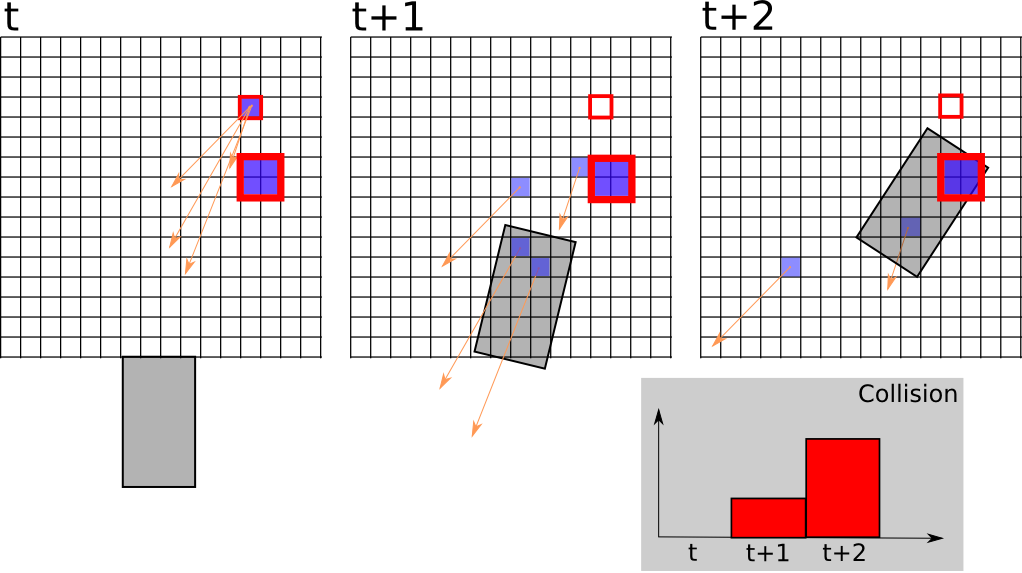
        <p>We developped a new grid-based approach for collision risk prediction
<a href="./bibliography.html#e-motion-2014-bid1">[23]</a> , based on the Hybrid-Sampling Bayesian
Occupancy Filter framework. The idea is to compute an estimation of the Time
To Contact (TTC) for each cell of the grid, instead of reasoning on objects.
This strategy avoids to solve the difficult problem of multi-objects detection
and tracking and provides a probabilistic estimation of the risk associated to
each TTC value.</p>
        <p>Using motion sensors embedded in the mobile robot (Inertial Measurement Unit,
GPS, Wheel speed and steering sensor, visual odometry, etc.), the displacement
of the grid between two updates is estimated. The full description of
occupancy and dynamics of the scene given by the HSBOF is then used to assess
collision risks in the future and even localize them in the grid. The risk
evaluation consists in a short-term prediction of the scene configuration
(figure <a title="A new formulation of the Bayesian Occupancy Filter: a hybrid sampling based framework" href="./uid38.html#uid48">4</a>  and of the robot position. This way a collision
likelihood can be computed over time. Using those likelihoods, computed by
cell and particle, an estimation of the risk over a period, and a localization
of this risk in the grid are performed.</p>
        <div align="center" style="margin-top:10px">
          <a name="uid48">
            <!--...-->
          </a>
          <table title="" class="objectContainer">
            <caption align="bottom"><strong>Figure
	4. </strong>Collision risk estimation over time for a specific cell. The cell
position is predicted according to its velocity, along with the mobile robot.
This risk profile is computed for every cell, and then used to integrate over
time the global collision risk.</caption>
            <tr align="center">
              <td>
                <table>
                  <tr>
                    <td xmlns="" style="height:3px;" align="center">
                      <img xmlns="http://www.w3.org/1999/xhtml" style="width:341.6013pt" alt="IMG/schemaTTC.png" src="IMG/schemaTTC.png"/>
                    </td>
                  </tr>
                </table>
              </td>
            </tr>
          </table>
        </div>
        <div align="center" style="margin-top:10px">
          <a name="uid49">
            <!--...-->
          </a>
          <table title="" class="objectContainer">
            <caption align="bottom"><strong>Figure
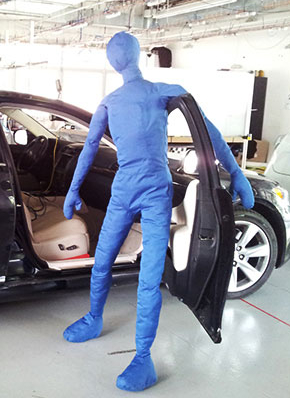
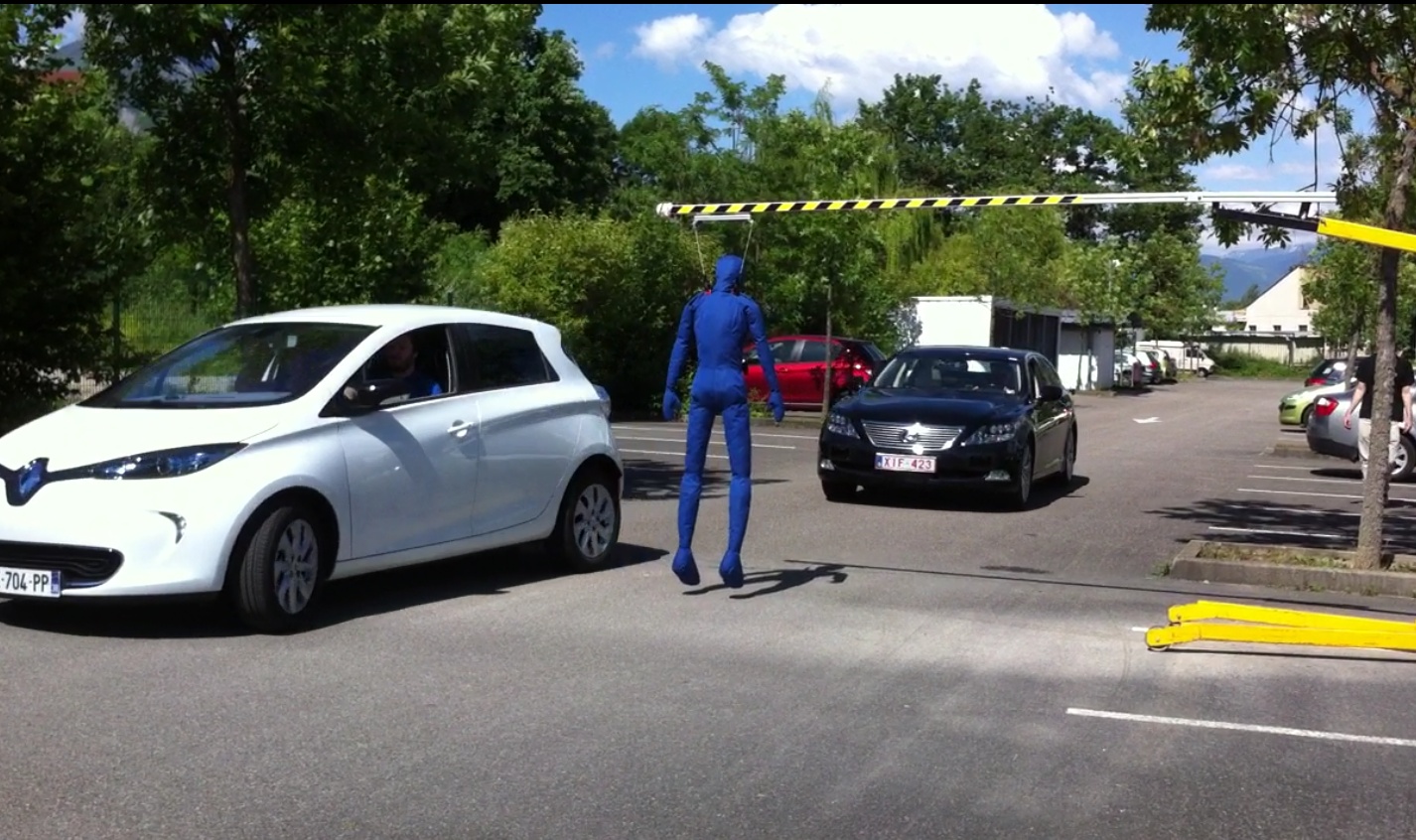
	5. </strong>(a) Fake pedestrian used for experiments. (b) The mannequin is
attached to a system with a runner, in order to allow lateral displacements.</caption>
            <tr align="center">
              <td>
                <table>
                  <tr>
                    <td xmlns="" style="height:3px;" align="center">
                      <img xmlns="http://www.w3.org/1999/xhtml" style="width:111.01765pt" alt="IMG/Jean-Kenny4.jpg" src="IMG/Jean-Kenny4.jpg"/>
                    </td>
                    <td xmlns="" style="height:3px;" align="center">
                      <img xmlns="http://www.w3.org/1999/xhtml" style="width:260.47026pt" alt="IMG/Mannequin_Lexus.jpg" src="IMG/Mannequin_Lexus.jpg"/>
                    </td>
                  </tr>
                </table>
              </td>
            </tr>
          </table>
        </div>
        <div align="center" style="margin-top:10px">
          <a name="uid50">
            <!--...-->
          </a>
          <table title="" class="objectContainer">
            <caption align="bottom"><strong>Figure
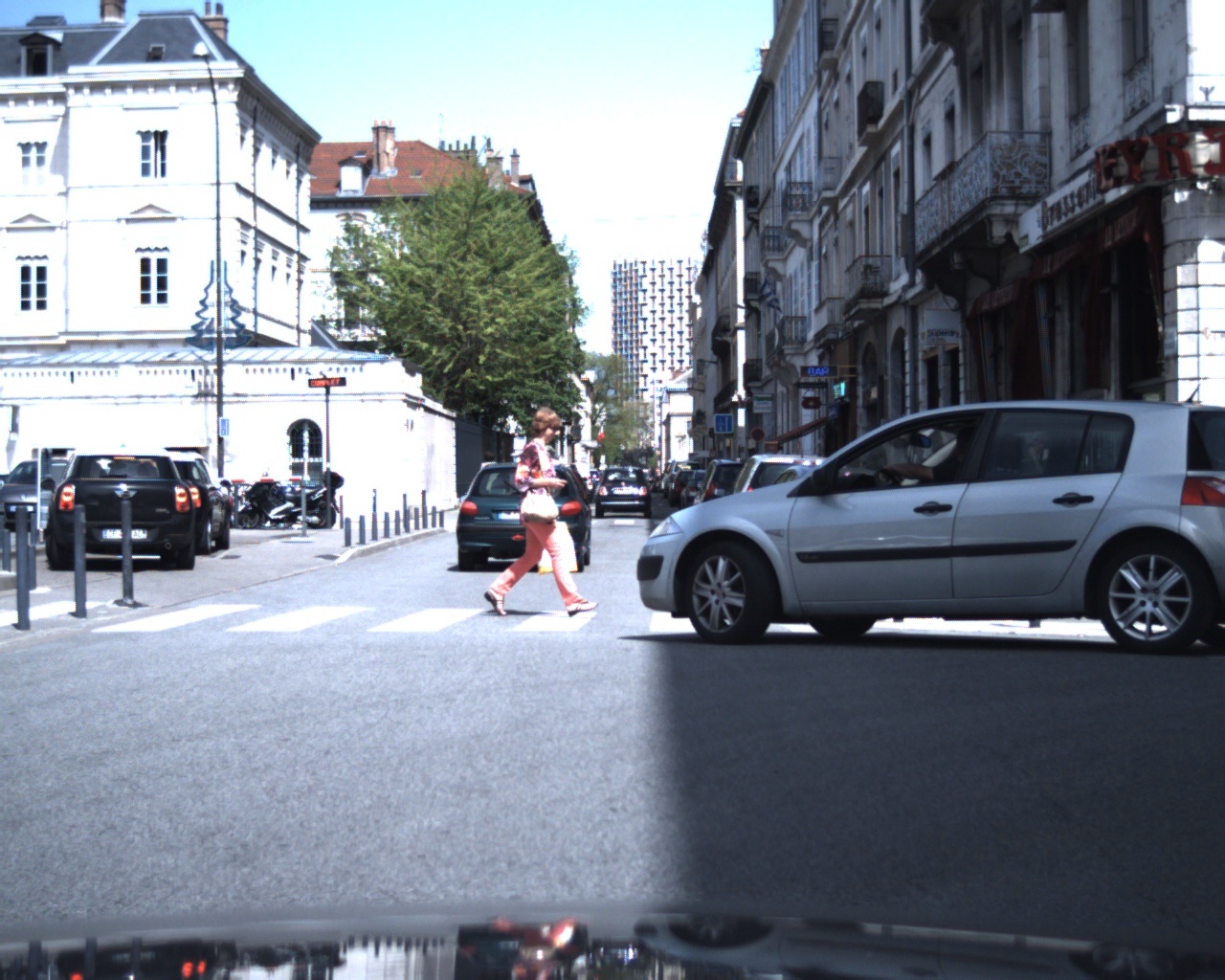
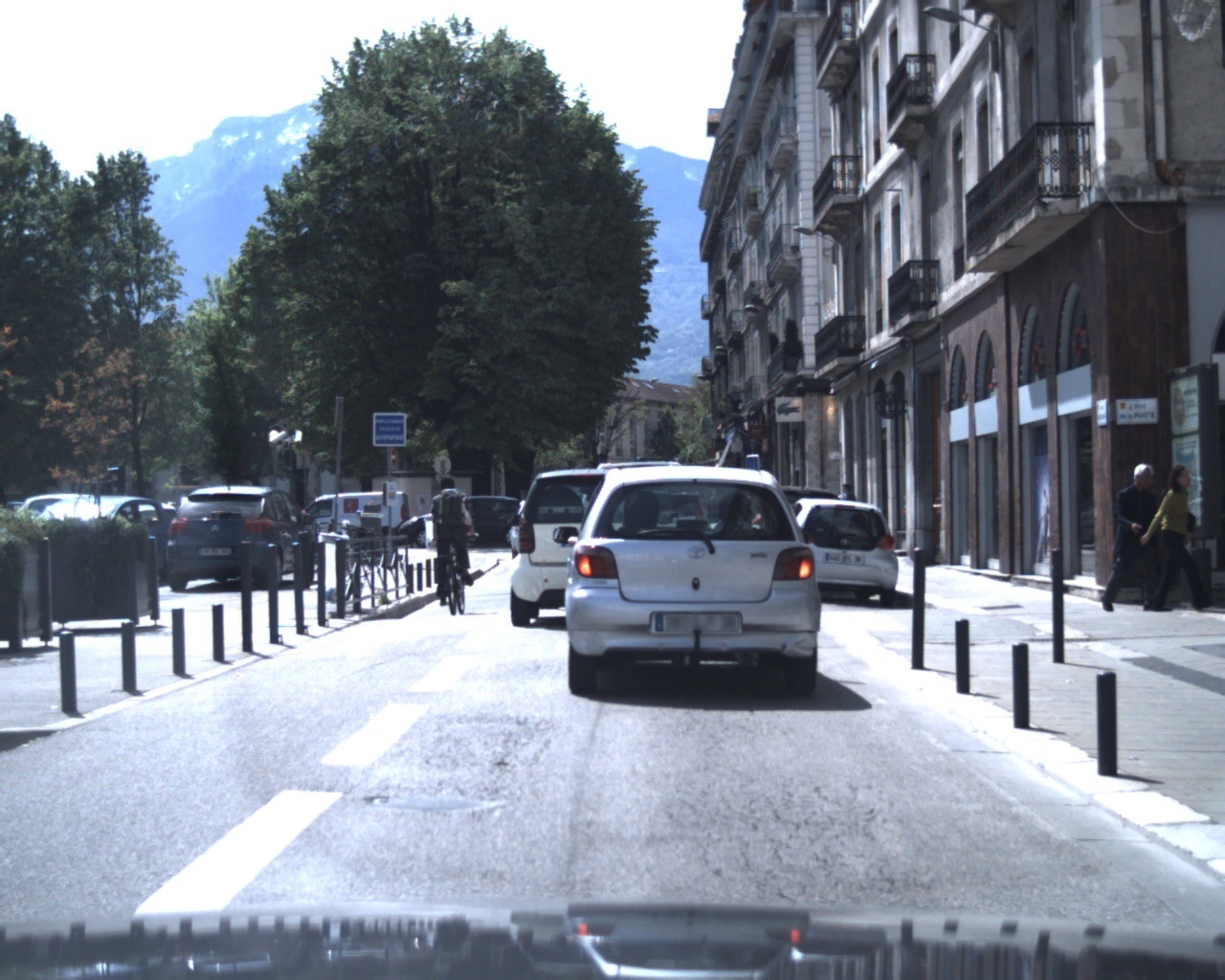
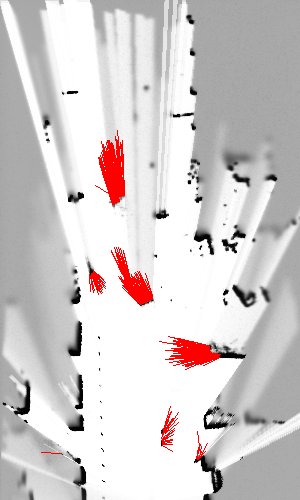
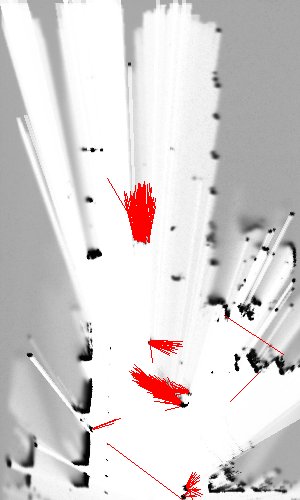
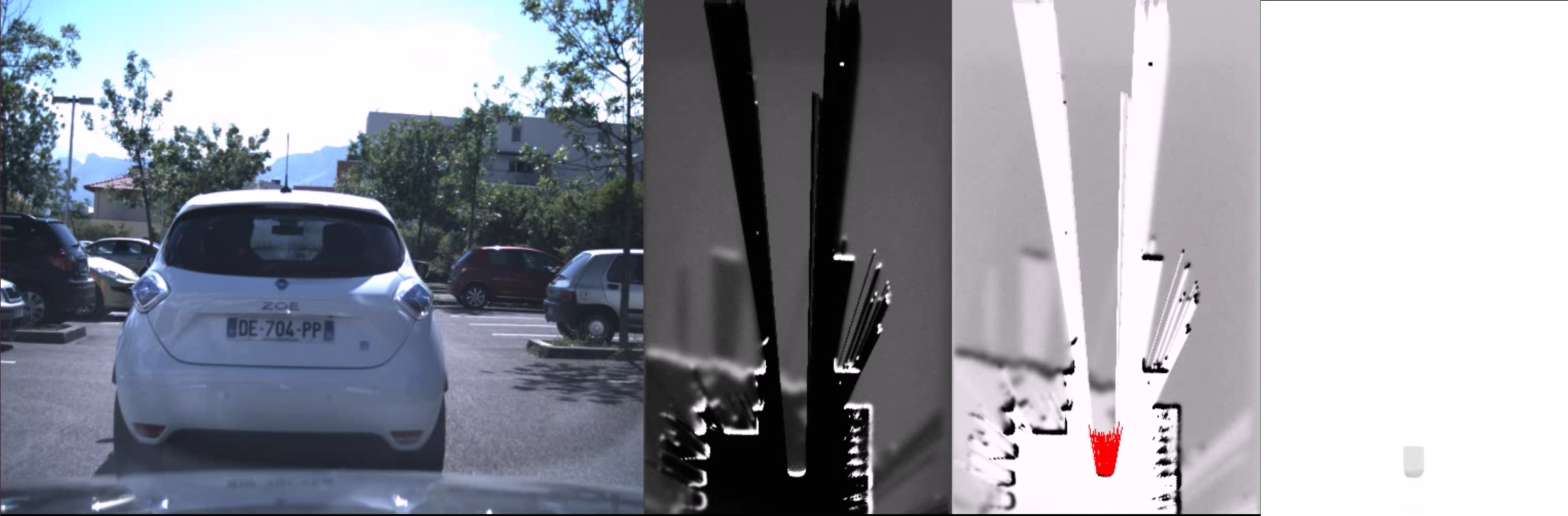
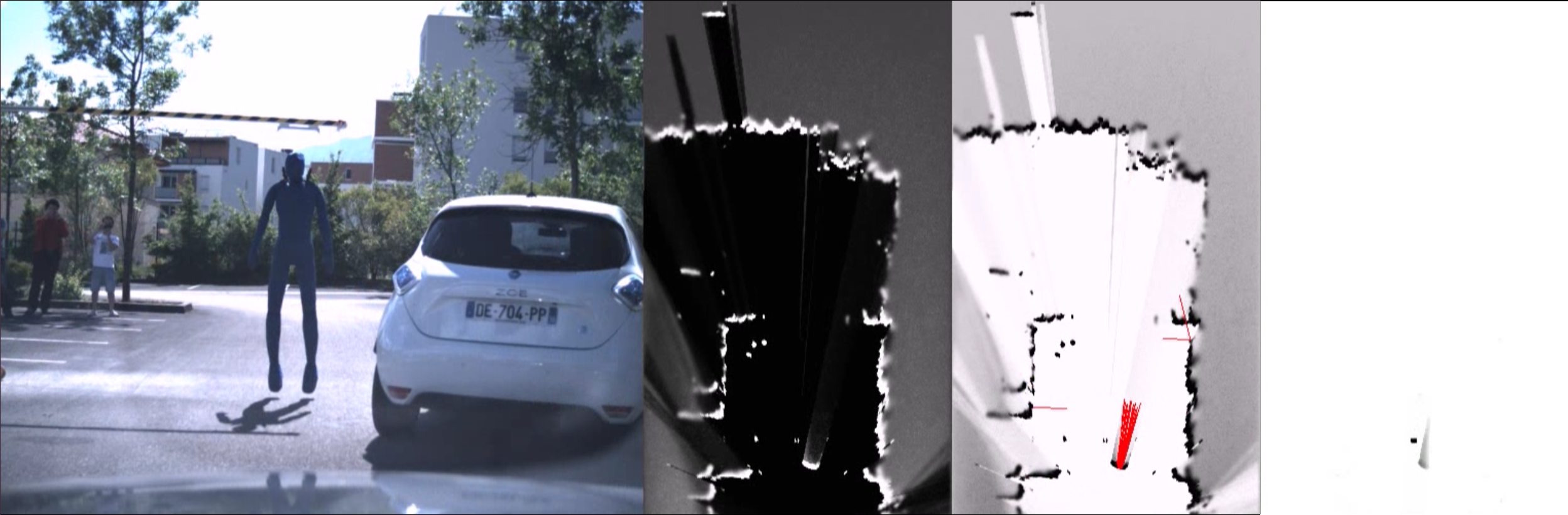
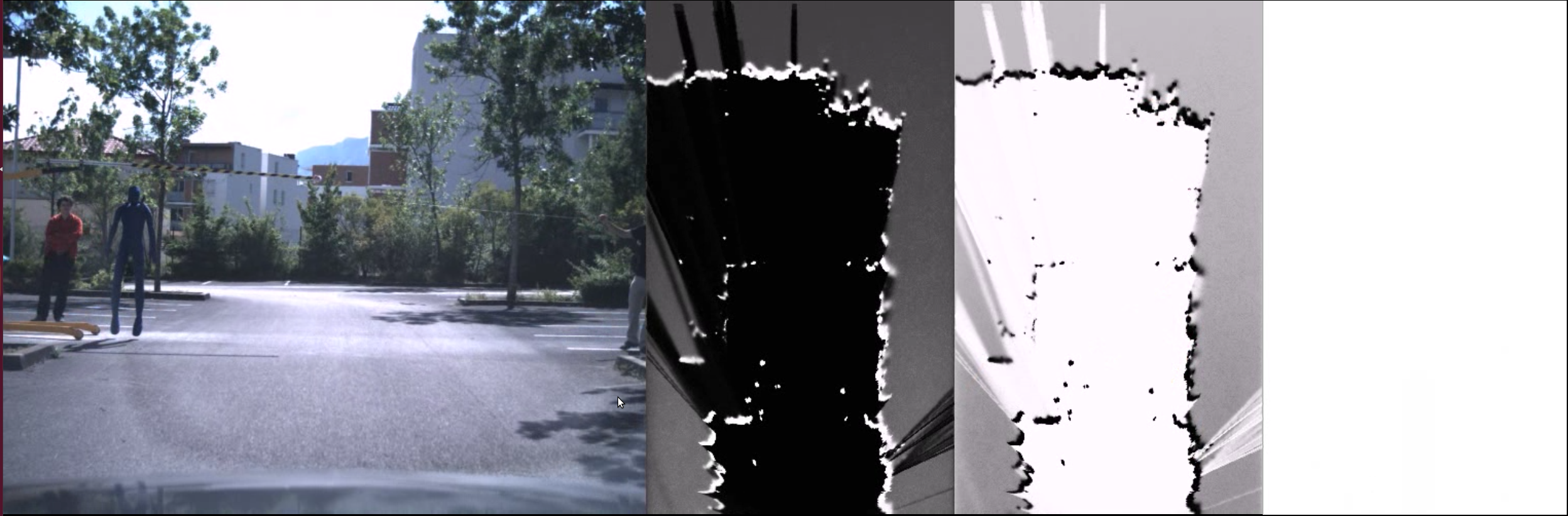
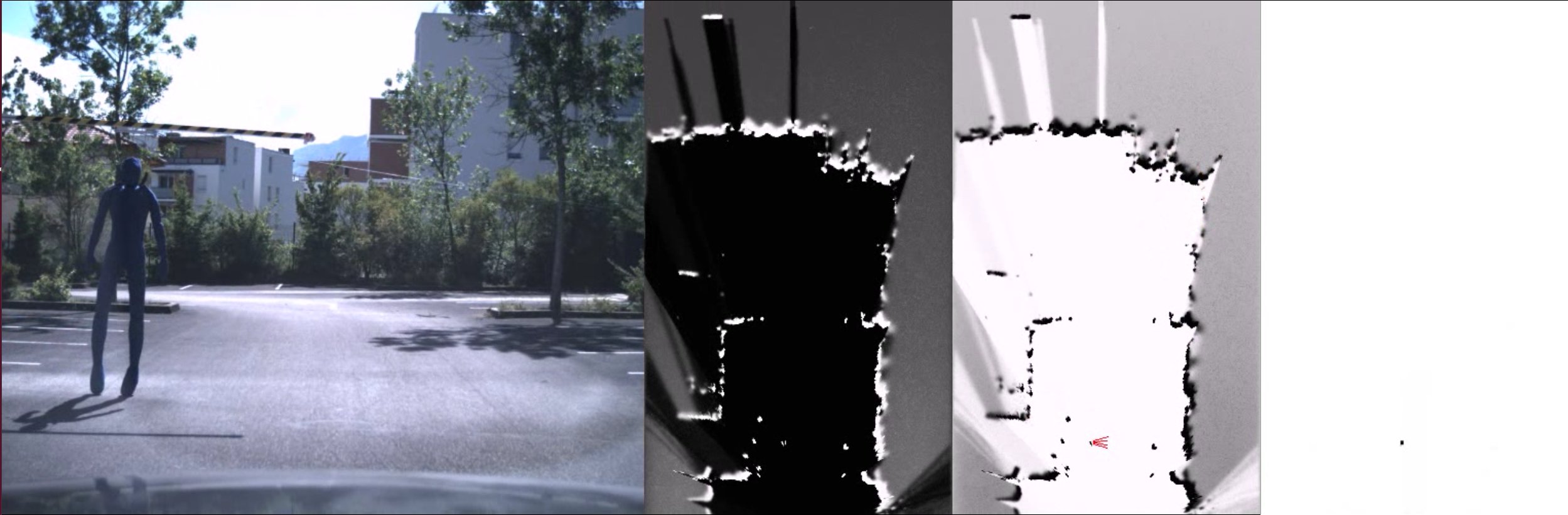
	6. </strong>Results of the system. Each image is a visual capture from
the embedded camera, the estimated occupancy grid in front of the car (white
for occupied, grey for unknown, black for empty), the estimated motion field
(if a case is seen as dynamic, a red motion vector showing the average
velocity in the cell is drawn on the map) and finally the estimated risk map
for 0.5s. The first sequence (a) (b) presents the appearance of an occluded
pedestrian, the second (c) (d) a moving pedestrian heading towards the road.</caption>
            <tr align="center">
              <td>
                <table>
                  <tr>
                    <td xmlns="" style="height:3px;" align="center">
                      <img xmlns="http://www.w3.org/1999/xhtml" style="width:341.6013pt" alt="IMG/voiture1.png" src="IMG/voiture1.png"/>
                    </td>
                  </tr>
                  <tr>
                    <td xmlns="" style="height:3px;" align="center">
                      <img xmlns="http://www.w3.org/1999/xhtml" style="width:341.6013pt" alt="IMG/voiture2.png" src="IMG/voiture2.png"/>
                    </td>
                  </tr>
                  <tr>
                    <td xmlns="" style="height:3px;" align="center">
                      <img xmlns="http://www.w3.org/1999/xhtml" style="width:341.6013pt" alt="IMG/jeankenny1.png" src="IMG/jeankenny1.png"/>
                    </td>
                  </tr>
                  <tr>
                    <td xmlns="" style="height:3px;" align="center">
                      <img xmlns="http://www.w3.org/1999/xhtml" style="width:341.6013pt" alt="IMG/jeankenny2.png" src="IMG/jeankenny2.png"/>
                    </td>
                  </tr>
                </table>
              </td>
            </tr>
          </table>
        </div>
      </div>
      <!--FIN du corps du module-->
      <br/>
      <div class="bottomNavigation">
        <div class="tail_aucentre">
          <a href="./uid35.html" accesskey="P"><img style="align:bottom; border:none" alt="previous" src="../static/img/icons/previous_motif.jpg"/> Previous | </a>
          <a href="./uid0.html" accesskey="U"><img style="align:bottom; border:none" alt="up" src="../static/img/icons/up_motif.jpg"/>  Home</a>
          <a href="./uid51.html" accesskey="N"> | Next <img style="align:bottom; border:none" alt="next" src="../static/img/icons/next_motif.jpg"/></a>
        </div>
        <br/>
      </div>
    </div>
  </body>
</html>